
Key Takeaways
- Reset a tripped breaker only once after switching off or unplugging connected loads.
- Leave the circuit off if it trips again, feels hot, smells burned, buzzes, or will not remain on.
- Never remove a panel cover or touch exposed panel components; energized parts may remain live even when the main is off.
- Replacing the breaker is appropriate only after the circuit and connected equipment are tested.
- Repeated trips may point to a dedicated circuit, wiring repair, load-management solution, or panel upgrade.
What a Tripping Breaker Is Protecting
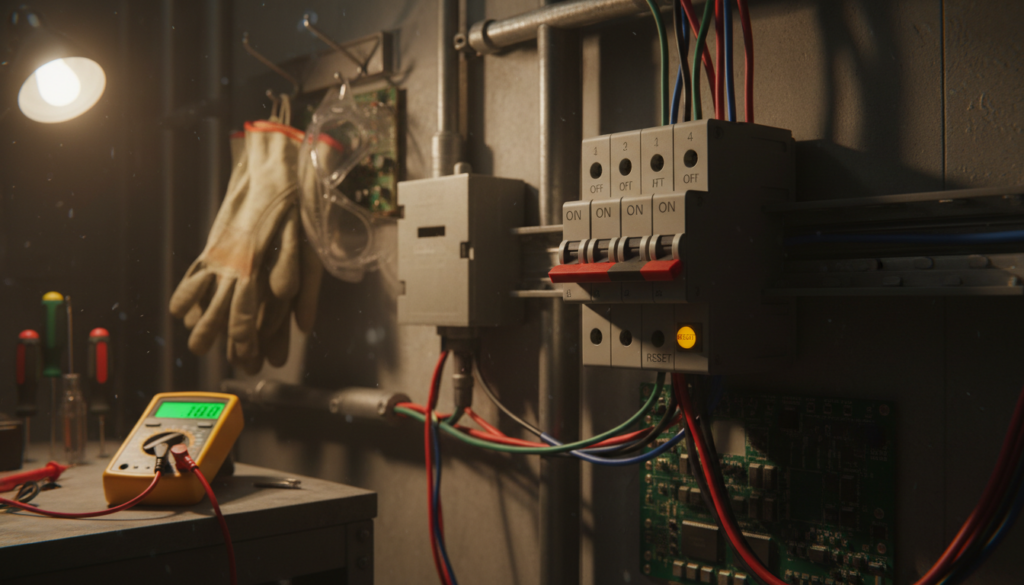
A circuit breaker is an overcurrent protection device. It opens the circuit when current rises above a safe level for the conductors and equipment. That helps reduce overheating and fire risk, but the breaker does not explain why the condition occurred.
A standard breaker primarily responds to overloads and short circuits. A GFCI responds to current leaking from its intended path, while an AFCI is designed to detect certain dangerous arcing conditions. Some modern breakers combine more than one type of protection.
The Four Most Common Causes
Common causes of a tripping breaker
1. The circuit is overloaded
An overload occurs when connected equipment asks for more current than the branch circuit is designed to supply. In Vista homes, this often appears after adding a portable air conditioner, space heater, air fryer, microwave, workshop tool, home-office equipment, or charging equipment to a shared circuit.
A useful clue is timing. If the breaker stays on until a specific appliance starts, the circuit may be overloaded or the appliance may be drawing abnormal current. Installing a larger breaker is not a safe shortcut; breaker size must match the conductor and circuit design.
2. A short circuit or ground fault is present
A short circuit can produce a rapid current increase and may trip the breaker immediately. A ground fault occurs when current travels outside its intended path, sometimes through metal equipment, moisture, or damaged insulation. Burning odor, blackened receptacles, visible sparking, or repeated immediate trips are reasons to leave the circuit off.
3. An appliance or device is failing
Refrigerators, microwaves, dishwashers, disposal units, washing machines, HVAC equipment, pool pumps, office equipment, and portable appliances can develop internal faults. The building wiring and connected equipment should be tested separately before a repair is selected.
4. The breaker, panel, or connection is deteriorating
Breakers and panel connections can wear, loosen, corrode, or become heat-damaged. Discoloration, crackling, burned odor, rust, moisture, or evidence of previous unapproved modifications deserves prompt evaluation. Garages, exterior equipment, irrigation exposure, and coastal air can add corrosion concerns in North County.
A Safe Homeowner Check Before Calling
Use this limited check only when there is no heat, smoke, burning odor, sparking, buzzing, shock, visible damage, or water near electrical equipment:
- Switch off or unplug the equipment served by the tripped circuit.
- Move the breaker fully to OFF, then back to ON one time.
- Reconnect ordinary plug-in loads one at a time and note whether one device causes the trip.
- If the breaker trips again, leave it off and record the rooms, appliances, and conditions involved.
Do not open receptacles, remove the electrical panel cover, change breaker sizes, bypass a GFCI or AFCI, or use an extension cord as permanent wiring.
| Stop immediately: Do not reset a breaker when the panel or nearby equipment is hot, wet, sparking, smoking, buzzing, visibly damaged, or producing a burning odor. |
|---|
Breaker-Trip Decision Guide
| What You Observe | Likely Next Step | Why It Matters |
|---|---|---|
| Trips after several appliances run together | Load evaluation and possible dedicated circuit | The circuit may be operating beyond its intended capacity. |
| Trips immediately with no obvious load | Professional fault tracing | Damaged wiring, a short circuit, or a failed device may be present. |
| Trips when one appliance starts | Test the appliance and branch circuit | Replacing the breaker alone may leave the actual fault unresolved. |
| Hot, discolored, buzzing, or burned components | Leave circuit off and request urgent service | Heat or arcing can indicate a fire hazard. |
| Several circuits dim, flicker, or trip | Panel, service, and utility-side evaluation | The problem may extend beyond one branch circuit. |
What a Licensed Electrician Should Check
- Breaker type, rating, condition, and panel compatibility.
- Conductor size, insulation condition, splices, terminations, grounding, and bonding.
- Actual load and startup current from connected equipment.
- Voltage behavior under load and signs of a loose neutral or service connection.
- GFCI or AFCI trip indicators when those devices are installed.
- Available panel capacity and whether future loads require a dedicated circuit or service upgrade.
Good troubleshooting connects the symptom to evidence. Ask what was tested, what failed, whether the breaker was operating correctly, and why the recommended repair addresses the root cause.
Estimated Vista and North San Diego County Planning Ranges
| Service | Editorial Planning Range | Common Variables |
|---|---|---|
| Electrical diagnostic visit | $175–$350 | Time, access, intermittent faults, and testing required |
| Standard breaker replacement after diagnosis | $250–$550 | Breaker type, panel compatibility, and heat damage |
| New dedicated 120-volt circuit | $600–$1,500 | Distance, access, wall repair, and permit needs |
| New dedicated 240-volt circuit | $900–$2,500 | Amperage, wire route, equipment disconnects, and permit |
| Panel or service upgrade | $3,000–$7,500+ | Service size, meter work, utility coordination, and corrections |
How to Compare Repair Recommendations
- Switch off or unplug equipment served by the tripped circuit
- Move the breaker fully to OFF, then back to ON one time
- Reconnect ordinary plug-in loads one at a time and note triggers
- If it trips again, leave it off and record affected rooms and appliances
- Never remove the panel cover or touch exposed components yourself
A written scope should separate diagnosis, immediate safety work, required repairs, optional improvements, permit fees, and utility coordination. Be cautious when a contractor recommends a larger breaker or a complete panel replacement without explaining the load, conductor size, measured condition, and reason the existing equipment cannot remain in service.
These price ranges are editorial estimates rather than Good Electric quotes. The condition of the individual property determines the final scope.
How Good Electric Approaches This Type of Work
Good Electric serves Vista and North San Diego County with electrical troubleshooting, dedicated circuits, breaker and panel work, GFCI/AFCI service, EV charging infrastructure, and code-correction support. The practical objective is to identify whether the breaker is preventing an overload, responding to a fault, or failing itself—and then correct the actual condition rather than sell an unnecessary upgrade.
For remodeled or expanded properties, the evaluation should also consider how older circuits interact with new appliances, ADUs, home offices, heat pumps, EV chargers, and other modern loads. Photos, test results, and a clearly defined scope help owners compare options based on safety and long-term reliability.
What Vista Homeowners Should Know About Tripping Breakers
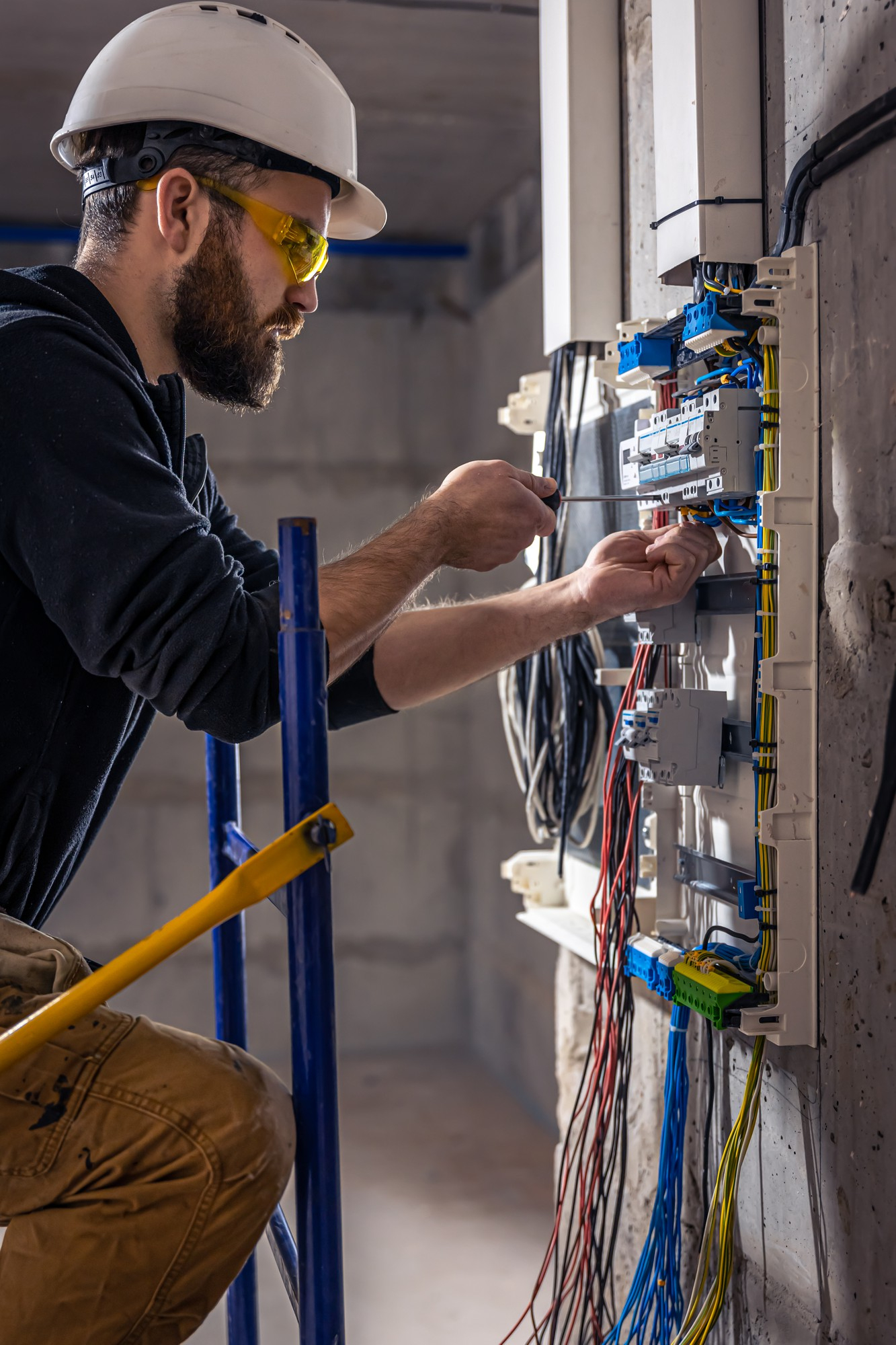
A circuit breaker in a Vista home opens the circuit to protect it from overloads and short circuits. Repeated trips usually mean the connected loads exceed the circuit, an appliance is failing, or the breaker or a connection is deteriorating. Reset a tripped breaker once after switching off loads, then leave it off and request service if it trips again or shows heat, odor, buzzing, or sparking.
Vista troubleshooting tips
- Reset once after turning off connected loads
- Leave it off if it trips again or feels hot
- Trace the trigger to a specific appliance
- Request a written scope that separates diagnosis from repairs
Published with Local Expertise
This guide was prepared by Good Electric, a licensed, insured licensed electrical contractor serving Vista and the surrounding area. The recommendations reflect real conditions we see on Vista-area properties. We follow California contractor licensing requirements and recommend every homeowner independently verify a contractor’s license and insurance before starting work.
Last reviewed: 2026-08-04. If you have an electrical need in Vista, Oceanside, San Marcos, Escondido, Carlsbad, and North San Diego County, contact Good Electric for a detailed inspection and written estimate.
Frequently Asked Questions
Is it safe to reset a breaker that tripped once?
It may be reasonable to reset it once after turning off connected loads, provided there is no heat, odor, noise, visible damage, moisture, or shock. If it trips again, leave it off.
Can a breaker trip because it is old?
Yes, but age should not be assumed to be the only cause. The circuit and connected equipment should be tested before the breaker is replaced.
Why does it trip only when the microwave or air conditioner starts?
High-demand equipment can reveal an overloaded circuit, voltage problem, weak connection, or equipment fault. Startup current is a clue, not a complete diagnosis.
Does a tripping breaker mean I need a new panel?
Not automatically. A dedicated circuit, wiring repair, appliance repair, breaker replacement, or load-management solution may be enough.
Should I install a larger breaker?
No. Increasing breaker size without verifying conductor size and circuit design can remove the protection the wiring depends on.
Technical Sources for Editorial Review
- U.S. Consumer Product Safety Commission – Home Electrical Hazard Guidance
- Electrical Safety Foundation International – Home Wiring Safety Tips
- Electrical Safety Foundation International – Electrical Overload Warning Signs
Source note: Technical references support general safety education. Local permitting, equipment specifications, and final scope must be confirmed for the individual property.
Schedule Electrical Troubleshooting in Vista
| Next step: When the same breaker keeps tripping, the reset is not the repair. Good Electric can evaluate the circuit, connected equipment, breaker, and panel capacity, explain the evidence, and recommend a code-compliant solution. Call 760-415-3549 or request service through the Good Electric contact page. |
|---|